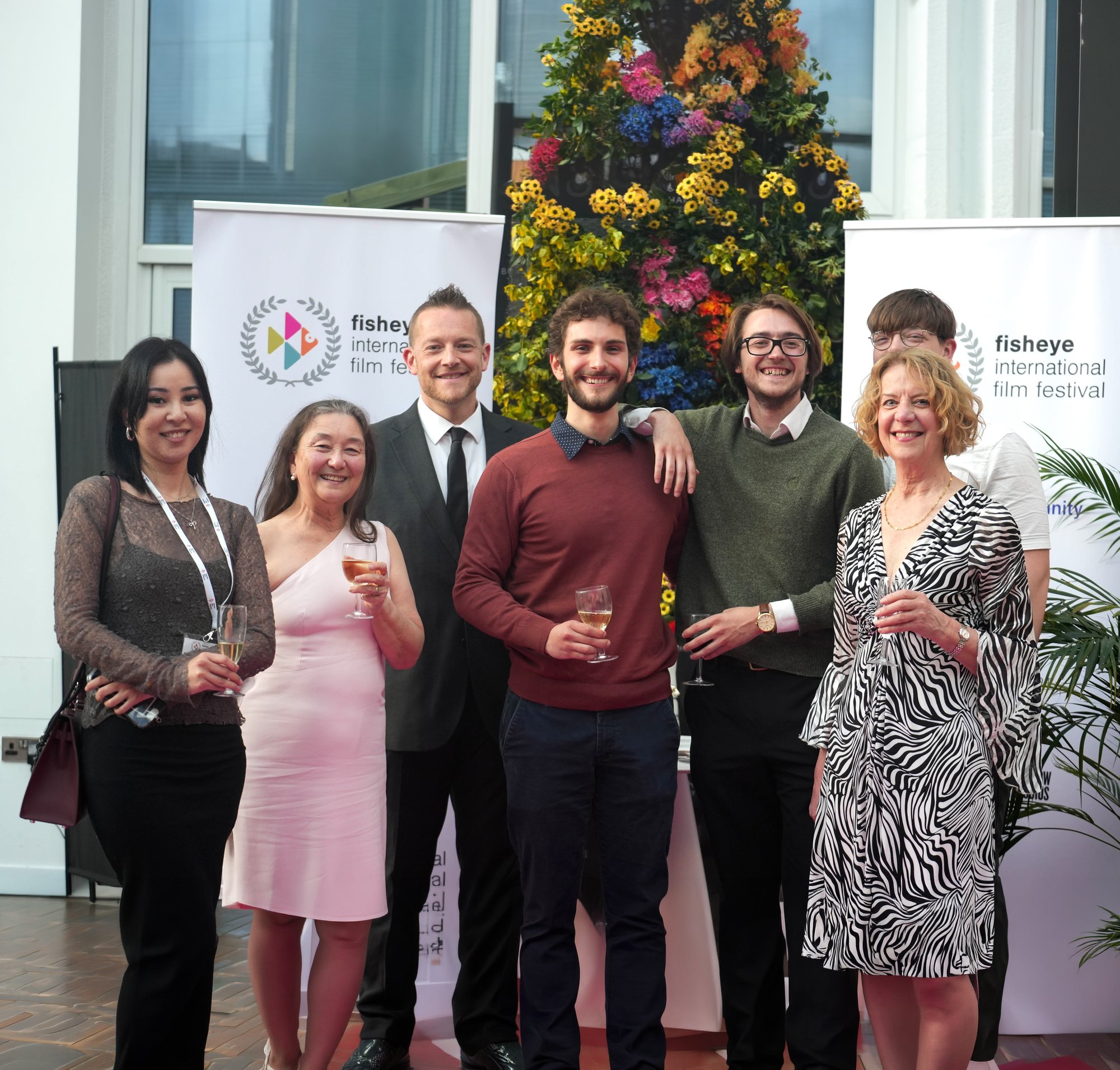
Fisheye world premieres
Seldom in our lifetimes can we say we were present at the birth of something so exciting that generations to come will thank those who made it happen.
Those lucky enough to get tickets to this year’s Fisheye International Film Festival will know what I am talking about. Now ten years in operation, the Fisheye team this year screened nine feature films in Wycombe, plus three more online, with world premieres hitting the screens right here in our town. The festival owes its existence today to the vision, passion and determination of Mariko Francombe, Richard Rowntree and Barbara Muston - three film lovers who, with the help of many other volunteers, have quietly built something our town should be proud of.
This year the festival ran from 16th April to 2nd May, offering a fantastic range of work from local BNU students to international professionals. I personally attended two premieres at the new Brunel Shed, which proved an excellent venue. The Postman of Nagasaki is a Franco-Japanese voyage to rediscover Captain Peter Townsend’s interviews with atom bomb survivor Sumiteru Taniguchi, made by Townsend’s youngest daughter Isabelle and Japanese film maker Mika Kawase. On the same day came the premiere of 8 Sekunden, by French film maker Jean-Marie Vinclair, rediscovering an unknown family connection to the WW2 French Resistance - a lyrical historical whodunnit told through the eyes of his children. What luck to have this festival on our doorstep, run entirely by volunteers, and growing in reputation thanks to the hard work of Mariko, Richard and Barbara.
Wycombe cultivating film talent
This month I also had the good fortune to meet up-and-coming local film maker Julia Libera.
Julia directed and edited the film Reflection – 2025 Best Documentary at Fisheye - a film focusing on women at different stages in life exploring self-reflection, through honest conversations recorded on camera. Her passion for the form comes from two places: a love of recording the truth, and a practical reality that documentary funding is more affordable than fiction.
Julia first borrowed a camera from her father, using family as her earliest inspiration. Originally from Poland, Julia came to study film in High Wycombe, drawn by Buckinghamshire’s filmmaking reputation. Her love of the town is now shaping one of her next projects — a documentary offering a fresh perspective on the life and beauty of High Wycombe, seen through a young outsider’s eyes.